Should you actually read it?

Get the verdict first: what the book feels like, who will love it, what may disappoint you, and what to choose instead.

33 full reviews14 quick takes33 reviews with source notes

Find the report that answers your question

Search by title, author, topic, or the problem you want the book to help with.

Review length
Subject shelf Swipe to see every shelf

33 full reviews shown

Full reviewReviewed July 12, 2026

1984

George Orwell

Still the most powerful novel about a state that wants more than obedience: it wants authority over memory, language, intimacy, and reality itself. Read it as historically situated political fiction, not a label for every disliked rule or new surveillance tool.

Read if: You want a gripping, intellectually serious novel about political language, manufactured reality, surveillance, coercion, private loyalty, and the destruction of a person’s ability to trust their own mind.

Full reviewReviewed July 12, 2026

A Court of Thorns and Roses

Sarah J. Maas

A fiercely readable romantasy gateway with a familiar fairy-tale skeleton, strong erotic tension, and a brutal final act. Choose it for romance-first momentum, not subtle writing, clean power dynamics, or deep fantasy systems.

Read if: You want a fast, emotionally direct Beauty and the Beast and Tam Lin remix; fae courts; escalating trials; sexual tension; and a long series whose romantic and political center changes after book one.

Full reviewReviewed July 12, 2026

A Game of Thrones

George R. R. Martin

A landmark political fantasy whose rotating viewpoints turn honor, family, gender, class, and power into lived dilemmas rather than lore. It is also an extreme-content commitment to a still-unfinished seven-book plan, so the right reader needs both appetite and informed consent.

Read if: You want morally complicated dynastic politics, multiple limited viewpoints, patient setup, dangerous consequences, and a fantasy world where institutions and family obligations matter more than magical spectacle.

Full reviewReviewed July 11, 2026

Atomic Habits

James Clear

The clearest practical habit manual on the shelf. Its science is mostly well-established synthesis rather than discovery, but Clear turns it into a system people can actually run.

Read if: You want a concrete method for starting a useful behavior, weakening an unwanted one, or making consistency depend less on motivation.

Full reviewReviewed July 12, 2026

Behave

Robert Sapolsky

The most ambitious readable map of why humans do what they do, and a genuinely useful corrective to single-cause stories. Read it for the framework and the questions it teaches you to ask, not as the final word on every study, culture, or theory of responsibility.

Read if: You want one ambitious map connecting neurons, hormones, development, culture, evolution, tribalism, morality, violence, and cooperation, and you are willing to let a long book complicate your favorite explanations.

Full reviewReviewed July 12, 2026

Born a Crime

Trevor Noah

A comic memoir that makes apartheid’s daily machinery clear without turning a childhood into a history lecture. Noah’s jokes open the door, but his mother Patricia’s choices, labor, faith, and survival are the reason to stay.

Read if: You want an accessible, funny, painful coming-of-age memoir about apartheid’s daily machinery, post-apartheid inequality, language, identity, poverty, family, faith, and survival.

Full reviewReviewed July 12, 2026

Crime and Punishment

Fyodor Dostoevsky

A feverish, morally serious novel about an intelligent man who turns other people into pieces of a theory, then discovers that neither his motives nor his conscience will stay abstract. It is far richer than a murder story and far less tidy than a conversion story.

Read if: You want psychological pressure, philosophical conflict, dark comedy, poverty and class analysis, an unusually intimate portrayal of guilt, and a novel that makes competing explanations fight rather than handing you one doctrine.

Full reviewReviewed July 12, 2026

Crucial Conversations

Joseph Grenny, Kerry Patterson, Ron McMillan, Al Switzler, and Emily Gregory

One of the best practical rehearsals for a hard conversation: clarify what you want, separate observations from your story, state your view without pretending certainty, and make room for the other person’s account. Its weakness is the title-sized promise that skill can make almost any conversation safe; power, retaliation, policy, and actual danger do not disappear because one speaker is calm and curious.

Read if: You avoid feedback until resentment leaks out, become prosecutorial when the stakes rise, manage people without a repeatable conversation structure, or need a shared team vocabulary for disagreement and follow-through.

Full reviewReviewed July 12, 2026

Deep Work

Cal Newport

The strongest practical case for protecting demanding thought from preventable fragmentation. Its attention diagnosis is well supported; its career promises, heroic schedules, and assumption that workers control their calendars are not.

Read if: You produce value through writing, analysis, design, coding, research, strategy, study, or another task whose quality changes when you can hold a complicated problem in mind without switching.

Full reviewReviewed July 12, 2026

Diary of a Wimpy Kid

Jeff Kinney

One of the best low-friction bridges into independent reading, built from short diary episodes, cartoons, social embarrassment, and a narrator whose selfish version of events is the central joke. Its value is not that Greg models good behavior, but that children can learn to read around him.

Read if: Your reader is roughly 8 to 12, enjoys embarrassment, pranks, school and sibling comedy, needs a successful-looking chapter book, or is ready to notice that a narrator’s confident explanation can conflict with pictures and consequences.

Full reviewReviewed July 12, 2026

Dune

Frank Herbert

A foundational science-fiction epic whose ecology, political machinery, religious engineering, and sense of historical depth still feel formidable. Read it as a gripping rise-to-power story that is also trying to make you suspicious of heroic power, while recognizing that the first novel makes that warning easier to admire than to fully perceive.

Read if: You want immersive worldbuilding with real political, ecological, economic, and religious systems; you enjoy strategy, dynastic conflict, prophecy, survival, and books that reveal more on a second reading.

Full reviewReviewed July 11, 2026

Emotional Intelligence

Daniel Goleman

The book that made emotion skills impossible to dismiss, but also made emotional intelligence sound cleaner, broader, and more predictive than the evidence supports. Keep the practices; retire the IQ rivalry.

Read if: You habitually treat emotion as noise, struggle to notice escalation before acting, or want a humane vocabulary for self-awareness, regulation, empathy, and relationship repair.

Full reviewReviewed July 11, 2026

Expecting Better

Emily Oster

An excellent antidote to unexplained pregnancy rules and a useful lesson in reading risk, but not a substitute for prenatal care. Trust its questions more than any medical conclusion that conflicts with current guidance.

Read if: You want absolute risks, study limitations, and tradeoffs explained clearly enough to have a better conversation with your prenatal clinician.

Full reviewReviewed July 12, 2026

Fourth Wing

Rebecca Yarros

An exceptionally effective dragon-school binge that turns physical vulnerability, deadly trials, conspiracy, and enemies-to-lovers attraction into relentless momentum. Its writing, institutions, and politics are much thinner than its emotional engine, so choose it as romance-forward spectacle rather than rigorous epic fantasy.

Read if: You want dragon riders, deadly school trials, an underestimated heroine with a chronic physical condition, familiar romance tropes delivered at full force, explicit chemistry, and a cliffhanger-driven series obsession.

Full reviewReviewed July 12, 2026

Gone Girl

Gillian Flynn

A viciously funny marriage thriller in which both narrators understand that the best story can matter more than the truth. The logistics eventually become outlandish, but the voices, clues, and fight to control public sympathy still reward a first read and a reread.

Read if: You want razor-sharp writing, two strategically unreliable narrators, morally repellent leads, media satire, and a reveal that changes how you read the evidence rather than merely supplying a culprit.

Full reviewReviewed July 12, 2026

High Output Management

Andrew S. Grove

Still the best compact operating manual for managers who need to turn their calendar into team results. Grove’s leverage, output, one-on-one, training, and task-specific delegation ideas remain unusually useful, but his factory lens can make ambiguous knowledge work look more measurable and controllable than it is.

Read if: People report to you, your week is full but the team is still blocked, meetings have no clear purpose, delegation alternates between neglect and micromanagement, or goals exist without a reliable operating cadence.

Full reviewReviewed July 11, 2026

Made to Stick

Chip Heath and Dan Heath

The most reusable communication framework on this shelf: memorable, practical, and appropriately suspicious of abstraction. Use it as a diagnostic checklist, not a formula that makes weak ideas true.

Read if: You need people to understand, remember, and repeat an idea in a presentation, lesson, strategy, campaign, product story, or organizational change.

Full reviewReviewed July 12, 2026

Meditations

Marcus Aurelius

An unmatched record of philosophy being used in real time to correct attention, judgment, conduct, and fear of death. Read it as one Roman emperor’s private practice, not a complete Stoic textbook or proof that its author ruled without contradiction.

Read if: You want a demanding but humane practice for examining impressions, reducing vanity and resentment, meeting mortality, and returning attention to just action in the present.

Full reviewReviewed July 12, 2026

Pride and Prejudice

Jane Austen

A fast, funny social novel in which romantic satisfaction depends on moral self-correction, accurate judgment, and economic reality. Read it for Elizabeth and Darcy, but also for Austen’s ruthless account of what marriage means when women’s housing, status, and security depend on it.

Read if: You want sparkling dialogue, comic embarrassment, slow-burn attraction, family chaos, and two intelligent people who must revise flattering stories about themselves.

Full reviewReviewed July 12, 2026

Project Hail Mary

Andy Weir

A superb science-puzzle adventure whose real achievement is turning experimental problem-solving into a warm first-contact friendship. The voice is broad and the central biology is speculative, but the momentum and emotional payoff are earned.

Read if: You want a standalone, spoiler-sensitive adventure built from experiments, engineering setbacks, first contact, humor, and an unusually generous friendship rather than combat or interstellar politics.

Full reviewReviewed July 11, 2026

Sapiens

Yuval Noah Harari

A thrilling machine for generating big questions and a risky place to collect final answers. Read it as Harari’s provocative interpretation of human history, not as a consensus textbook.

Read if: You want a vivid first map of human history and are willing to challenge its claims about cognition, agriculture, religion, empire, capitalism, happiness, and progress.

Full reviewReviewed July 11, 2026

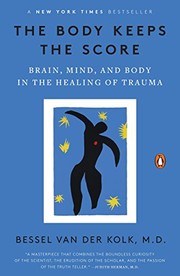
The Body Keeps the Score

Bessel van der Kolk

A humane, field-changing account of trauma’s lived physical effects, but an unreliable guide to which mechanisms are settled and which treatments work best. Read it for recognition and questions, then use current clinical guidelines for care.

Read if: You want language for how trauma can affect attention, memory, arousal, relationships, and bodily experience, and you can hold powerful case accounts alongside newer evidence.

Full reviewReviewed July 12, 2026

The Hunger Games

Suzanne Collins

A ruthlessly readable survival novel that turns first-person suspense into a critique of spectacle, inequality, propaganda, and the stories war tells about children. Its political system is sketched more boldly than deeply, but Katniss’s constrained perspective, practical intelligence, and accumulating trauma give the book far more moral weight than its imitators.

Read if: You want a fast dystopian thriller with a resourceful teenage narrator, morally purposeful tension, class conflict, media manipulation, and a heroine whose survival skills never make violence emotionally easy.

Full reviewReviewed July 12, 2026

The Innovator's Dilemma

Clayton M. Christensen

The classic explanation of why competent incumbents can rationally reject the markets that later threaten them. Its organizational mechanism remains powerful; its historical cases do not justify treating disruption as a universal law or prediction machine.

Read if: You lead an established product or organization whose best customers, margin targets, forecasts, and resource-allocation process keep making small markets, nonconsumers, or initially inferior products look irresponsible.

Full reviewReviewed July 12, 2026

The Martian

Andy Weir

The definitive competence-survival page-turner: a funny astronaut solves an escalating chain of Mars problems with experiments, arithmetic, and stubbornness. The science is unusually disciplined, but the opening disaster is knowingly impossible and the voice is much deeper than the characterization.

Read if: You want a complete standalone built from engineering, botany, chemistry, orbital mechanics, gallows humor, iterative failure, and international rescue effort, with no romance and very little introspection.

Full reviewReviewed July 12, 2026

The Mom Test

Rob Fitzpatrick

The best two-hour correction for founders who mistake compliments for evidence. Its rules make customer conversations dramatically less self-serving, but a clean interview is still qualitative discovery, not proof of market size, willingness to pay, retention, or a viable business.

Read if: You ask whether people like an idea, pitch before you understand the current workflow, leave interviews with enthusiastic adjectives but no decisions, or keep hearing that everyone wants the product while nobody advances.

Full reviewReviewed July 11, 2026

The Power of Habit

Charles Duhigg

Still the easiest story-led introduction to why repeated behavior matters, especially inside organizations. Its cue, routine, reward loop is memorable and useful for observation, but it compresses a much richer science into a formula and is less precise or immediately usable than Atomic Habits or Tiny Habits.

Read if: You want an engaging explanation of how repeated actions become automatic, how cravings and contexts sustain them, or how a leader can use one operational priority to expose and reshape a larger system.

Full reviewReviewed July 12, 2026

The Psychology of Money

Morgan Housel

An unusually clear guide to the behavior around money: risk, envy, enough, compounding, survival, and the stories people tell after outcomes. It is an excellent first mindset book and an incomplete financial plan.

Read if: You understand some financial mechanics but still chase other people’s returns, underestimate ruin, change plans with the market, confuse visible spending with wealth, or have never written down what “enough” means.

Full reviewReviewed July 12, 2026

The Shining

Stephen King

A devastating haunted-house novel in which a hotel exploits an alcoholic father’s shame, entitlement, and capacity for violence until his wife and five-year-old son are trapped with him. Its horror is supernatural, domestic, and historical at once, and far more emotionally intimate than the famous film.

Read if: You want slow-building supernatural horror, a family drama told from several minds, an unsparing account of addiction, a gifted child’s perspective, and a hotel whose buried violence becomes an active predator.

Full reviewReviewed July 12, 2026

The Silent Patient

Alex Michaelides

A lean, highly effective puzzle thriller whose famous reveal rewards attention and can support a reread. Its clinical setting creates atmosphere and ethical tension, but it should not be treated as a trustworthy picture of psychotherapy, forensic care, medication, or patient recovery.

Read if: You want a compact, bingeable psychological thriller with an unreliable perspective, short chapters, Greek-tragedy framing, and a reveal designed to make earlier scenes read differently.

Full reviewReviewed July 11, 2026

Thinking, Fast and Slow

Daniel Kahneman

A foundational map of judgment under uncertainty whose best ideas still hold up. Read it for prospect theory, base rates, overconfidence, and decision hygiene, while treating its dramatic behavioral-priming examples as historical rather than settled science.

Read if: You make forecasts, hire people, evaluate evidence, design choices, negotiate, invest, or simply want a better vocabulary for noticing how intuitive judgment goes wrong.

Full reviewReviewed July 11, 2026

Tiny Habits

BJ Fogg

One of the most usable books on behavior change. Fogg turns stable cues, low friction, and immediate positive feedback into a humane method that is easy to test, though adjacent habit research supports the branded method more strongly than direct trials of every claim.

Read if: You keep designing routines for your most motivated self, feel ashamed when ambitious plans collapse, or want a precise way to make a behavior easier to begin.

Full reviewReviewed July 12, 2026

Where the Crawdads Sing

Delia Owens

A highly readable marshland survival romance whose sensory nature writing and abandonment story carry more conviction than its murder mechanics, courtroom realism, racial imagination, or final moral turn. Read it as atmospheric melodrama with a mystery frame, not as legal or natural-history authority.

Read if: You want accessible historical fiction with lyrical coastal atmosphere, an abandoned child’s self-invention, two romances, animal behavior used as metaphor, and a courtroom mystery that accelerates the final third.

Quick take

Beach Read

Emily Henry

Two blocked writers swap genres for a summer and write their way back to hope, in a romcom with more grief underneath it than the cover suggests.

Read if: You want writer-on-writer banter, professional rivalry, a slow-burn romance, and a hopeful ending that makes room for grief instead of treating it as a brief obstacle.

Quick take

Bossypants

Tina Fey

A fast comedy memoir about growing up awkward, learning improv, writing for Saturday Night Live, and running 30 Rock. Fey is much more interested in the construction of a joke and a workplace than in confession.

Read if: You want jokes first, useful observations about improv and writers’ rooms second, and a quick account of being a woman making network comedy without a confessional arc.

Quick take

Demon Copperhead

Barbara Kingsolver

Demon’s voice makes this long Appalachian David Copperfield retelling readable through foster care, child labor, poverty, and opioid addiction. Start it for the narrator, but expect the systems around him, not one villain, to take the blame.

Read if: You want a long first-person survival story with humor, anger, a modern Dickens structure, and sustained attention to how foster care, healthcare, work, and addiction shape a child’s choices.

Quick take

Educated

Tara Westover

A gripping memoir about learning enough to name what your family cannot admit, then discovering that a new education does not make old loyalties disappear. The Cambridge PhD is the visible achievement; the loss of a shared family reality is the real cost.

Read if: You want a memoir about self-education, contested memory, family loyalty, abuse, and the painful difference between leaving a home and becoming free of its version of you.

Quick take

Man's Search for Meaning

Viktor E. Frankl

A brief Holocaust memoir followed by an introduction to logotherapy. Read it for Frankl’s account of meaning under conditions he did not choose, while refusing the crueler misreading that every sufferer can or must find the right response.

Read if: You want a short, serious account of meaning through work, love, and a person’s stance toward unavoidable suffering, and can keep that claim separate from blame or a promise of resilience.

Quick take

Maus

Art Spiegelman

A Holocaust survival account and a difficult father-son interview occupying the same panels. The animal masks make identity immediately legible, then the book keeps showing where that visual system fails to contain memory, prejudice, guilt, and inheritance.

Read if: You want a graphic memoir that treats Holocaust testimony, the ethics of representing it, and the damaged intimacy between survivor and child as inseparable subjects.

Quick take

Mexican Gothic

Silvia Moreno-Garcia

A stylish, patient haunted-house novel that lets a Mexican socialite walk into an English family’s rotten dream of blood purity. The first half is mostly threat and bad manners. The last act turns that pressure into vivid body horror.

Read if: You want a remote mansion, a determined and stylish heroine, and horror rooted in eugenics, colonial theft, marriage, and control.

Quick take

The Great Gatsby

F. Scott Fitzgerald

A short, bitter novel about a man who builds a fortune around one green light and mistakes longing for love. The sentences are beautiful. The people with old money are not.

Read if: You want a beautiful, devastating book you can finish in an afternoon, and you like stories about longing, reinvention, and class.

Quick take

The Haunting of Hill House

Shirley Jackson

A haunted-house novel with almost no visible monster and no safe place inside Eleanor’s mind. It is short, funny in flashes, and frightening because the house offers a lonely woman the welcome she has always wanted.

Read if: You want atmosphere and psychological dread over jump scares, and sentences precise enough to unsettle without ever showing you anything explicit.

Quick take

The Midnight Library

Matt Haig

A warm, easy fable about regret that offers hope by letting Nora try the lives she thinks she ruined. Its care is real. Its answer is also tidier than depression, suicide, or regret usually allow.

Read if: You want a hopeful, philosophical comfort read about appreciating the life you actually have.

Quick take

Throne of Glass

Sarah J. Maas

A quick, romance-heavy fantasy opener that introduces Celaena, a deadly contest, and a much larger series without yet showing that series at full strength. Fun is the promise here. Depth comes later.

Read if: You want a capable heroine, court intrigue, a love triangle, and a fantasy series built for a long binge.

Quick take

Tomorrow, and Tomorrow, and Tomorrow

Gabrielle Zevin

A big, painful friendship novel about two people who can build games together more easily than they can speak honestly. It takes play and creative work seriously, but its structure and repeated misunderstandings demand patience.

Read if: You want literary fiction about creative collaboration, friendship, and what it costs to make things with another person.

Quick take

Verity

Colleen Hoover

A fast, lurid thriller powered by a private manuscript that may be confession, performance, or trap. It is built to make you keep reading, then argue about whether the final uncertainty is clever or evasive.

Read if: You want a fast, twisty psychological thriller with a found-manuscript device and real dark-romance tension.